
Anatomy in Motion (AiM) in Christchurch
Understanding how your body moves, one step at a time.
Walking is something we do every day, often without thinking about how our bodies move. However, the way your feet, ankles, knees, hips, spine and other parts of your body work together can influence how comfortably and efficiently you walk.
Anatomy in Motion (AiM) is a movement-based approach that explores how your body manages movement and responds to the forces involved in walking.
At MK Osteopathy, we use AiM principles during walking assessments to identify movement restrictions, adaptations and compensation patterns that may be contributing to discomfort or difficulty moving.

What is Anatomy in Motion (AiM)?
Anatomy in Motion is a movement-based approach that explores how the body moves through the different phases of walking and how its joints and muscles work together.
Walking involves much more than moving one foot in front of the other. Each step requires coordinated movement throughout the body, with joints moving in different directions to help manage the forces created as your feet contact and push away from the ground.
When movement is restricted or changes following an injury, your body may adapt by using alternative movement strategies. These compensations can influence how other areas move and may contribute to discomfort or difficulty with certain activities.
AiM explores these relationships by observing your movement and identifying areas where your body may not be moving as freely or coordinating movement as effectively as expected.
Rather than focusing only on the area where you feel pain, AiM considers how the different parts of your body work together during walking and other movements.

The connection between walking, joint movement and your whole body.
Your walking pattern can provide valuable information about how your body moves and adapts.
An AiM assessment looks beyond your feet to consider how movement throughout your body contributes to each step.
We explore things such as:
Foot and ankle movement – How your feet interact with the ground and how your ankles move as you walk.
Knee and hip movement – How your lower-limb joints coordinate to support walking and manage the forces involved.
Pelvis and spinal movement – How your pelvis and spine move in relation to your legs during each step.
Whole-body coordination – How different joints and body regions work together to create smooth, coordinated movement.
Movement restrictions – Whether certain joint movements appear limited or difficult to access during walking.
Compensation patterns – How your body may adapt when a movement is restricted or difficult to perform.
Previous injuries and daily activities – How your injury history, work, exercise and lifestyle may relate to your current movement patterns.
How and who can AiM help?
Walking is a repeated activity that places changing demands on your muscles and joints throughout the day. Understanding how you walk can help identify movement patterns that may be relevant to your symptoms or physical goals.
A walking assessment may be helpful if you experience:
Recurring discomfort when walking.
Foot, ankle, knee, hip or lower back pain.
A feeling of stiffness or restriction when moving.
Changes in your walking pattern following an injury.
Difficulty returning to walking or exercise comfortably.
Movement limitations affecting your daily activities or sporting performance.
An assessment can also be useful if you are curious about how you move and want to understand your body's movement patterns more clearly.
Not every difference in walking mechanics causes pain, and pain does not always result from the way you walk.
The aim is to understand your individual movement and determine whether any findings are relevant to your symptoms and goals.
Anatomy in Motion Appointment?
Your appointment is tailored to you. Here’s what you can expect.
Discussion and History
Whole-Body Movement Assessment
Movement-Based Treatment
Personalized Plan
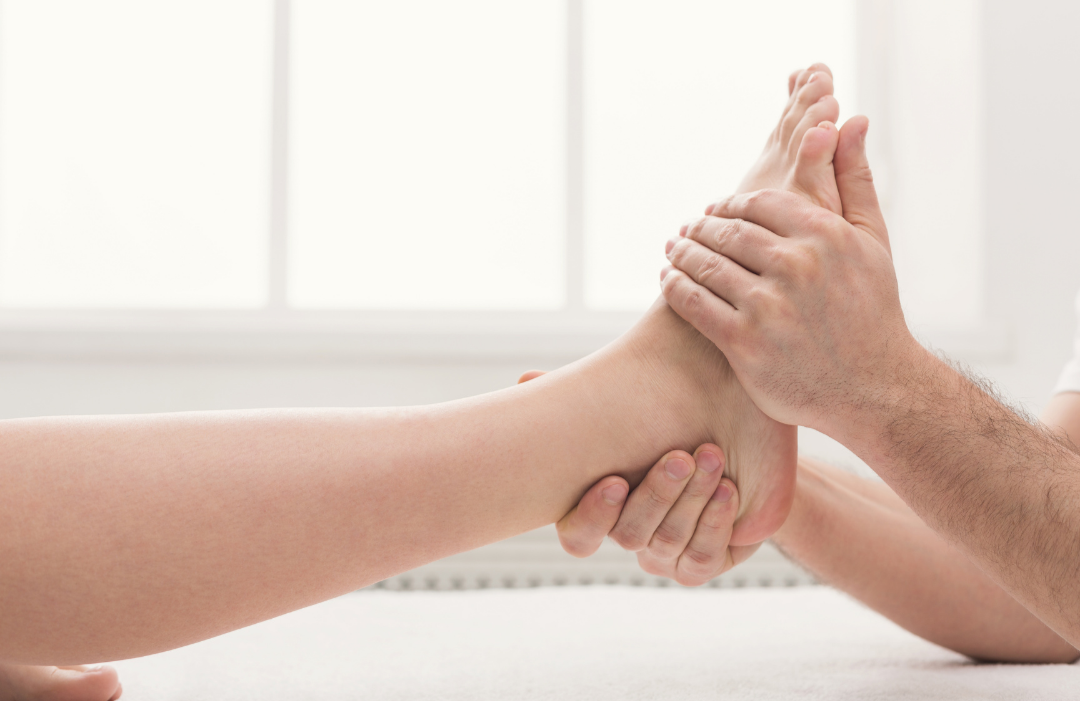
Using AiM principles, your therapist guides you through specific movements designed to explore and improve access to particular joint movements and movement patterns. The aim is to help your body develop more options for managing the forces involved in movement.
We review your movement and discuss the findings with you. Where appropriate, we may recommend specific movements or strategies to practise between appointments to support your progress and everyday activities.


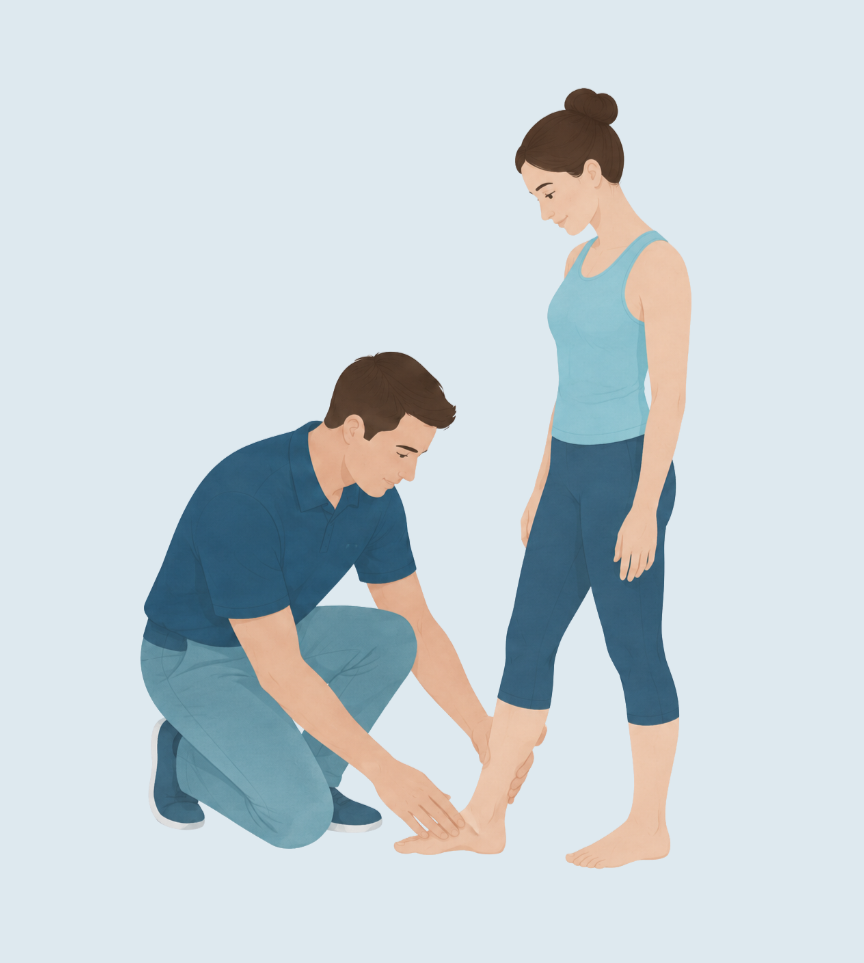
Your therapist assesses your movement from your feet to your head, observing how different joints move and coordinate during walking. We look for movements that may be restricted and identify patterns your body may have developed to compensate.
We begin by discussing your symptoms, previous injuries, daily activities and what you would like to achieve. This helps us understand how your movement difficulties affect you.

Anatomy in Motion: Frequently Asked Questions
Anatomy in Motion: FAQ
-
An AiM Walking Assessment uses principles from Anatomy in Motion to explore how your body moves during walking. It considers joint movement, whole-body coordination and possible compensation patterns to help guide individualised treatment.
-
Anatomy in Motion is a movement-based approach that examines how the body moves through the different phases of walking and how joints and body regions work together to manage movement and ground reaction forces.
-
AiM places particular emphasis on how the whole body moves through the phases of walking, including the movements available at different joints and the adaptations the body may develop. The findings help guide movement-based treatment tailored to the individual.
-
An assessment may help identify movement patterns that are relevant to your symptoms and guide treatment accordingly. Pain can have many contributing factors, however, and an assessment cannot guarantee that changing your walking mechanics will resolve it.
-
No. You may also choose an assessment to better understand your walking pattern, explore movement restrictions or work towards moving more comfortably during daily activities and exercise.
-
This depends on your symptoms, assessment findings and goals. Some people may benefit from a single assessment and treatment session, while others may need further appointments. Your therapist will discuss an appropriate plan with you.
-
No. AiM is a specific movement-based approach, while osteopathy is a broader hands-on healthcare approach to assessing and treating musculoskeletal concerns. AiM principles can be incorporated into osteopathic care where appropriate.
No. AiM is a specific movement-based approach, while osteopathy is a broader hands-on healthcare approach to assessing and treating musculoskeletal concerns. AiM principles can be incorporated into osteopathic care where appropriate.
-
If your walking difficulties relate to an injury covered by ACC, you may be eligible for treatment under an ACC claim, depending on the service provided and applicable requirements. Contact us to discuss your circumstances and any fees before booking.

Ready To Get Started?
Take the next step towards moving more comfortably.